Friday, March 19, 2021

The History of Existing Things


Those hallowed and pure motions of the sense
Which seem, in their simplicity, to own
An intellectual charm; that calm delight
Which, if I err not, surely must belong
To those first-born affinities that fit
Our new existence to existing things

-William Wordsworth

In a carved wooden box, on a shelf are things that would mean little to most  There are a couple of neatly posted pieces of newspaper, on which the date was manually stamped, a date of a clear Autumn Day.  There is my Mom's Badge from the Sheriff's Department, to lie along side my own badge each night.  There is a small yet deadly knife and a delicate Ceramic skunk on which my Mom's initials lie.  It occupied Dad's shop bathroom until Big Bro and I remodeled it, to make it elderly-friendly, and Mr. Skunk came with me to live. All of them small things, by themselves, just objects, together a collage of joy and pain, things without consequence but for their history.

Most of us get the little things around us, from simple to sublime, some posting them cursively on paper, others capturing them in photos, some just cataloging them away in the brain for quiet afternoons of reflective thought. Some walk through life with a remote in their hand and blinders on, not realizing what they missed until all they hear is the final shut of a door.

Others look only ahead, paying no attention to the past, the remembrances of brave men, the battles and freedoms we have fought for. My flag was at half staff not long back and I bet half the neighbors did not know why, seeing only what's going on in this moment, however useless, with no intention of availing themselves of the lessons of history that rattle around in our pockets like rare coins.

Not I. For me, I'll take the slow path, the closer look, the unseen poetry in a drop of melting snow, the land and soul that thirst, the blood and the tears that united a nation.

I've never been one to collect things, thimbles, figurines, little knick knacks that will require dusting long after I am dust. I've moved too many times over the years to even think about it. I have some cookbooks, I have some of my Mom's glassware and Swedish horse collection, I have a well loved violin that follows me around, annoying the neighbors.

But I learned early to note and catalog things, starting with plants in my first botany class, then working on up to so many small bones. It's why I always liked science museums, having an ingrained curiosity since childhood as to what made things tick. But it wasn't just plants and animals, machines as well needed to be understood. It's why in high school, while the girls were gossiping and buying clothes, I was learning how to rebuild a carburetor.

Certainly now, with the Internet, much of the mystery is gone, the average person being able to learn how to do just about anything on a home computer. Even with graphics, computer animations and YouTube, there are still some ways we learn that are best learned hands on.

But with the Internet, you miss those integral steps, that human interaction that provides a corporate experience. It's physical interaction with emotional understanding that you are not going to get with a 57 inch TV. Comparing a TV show on a subject to hands on looking, touching and watching what it's made of, is like seeing a picture of fresh pie, and tasting it on your tongue. The subject area may be the same, but the experiences are light years apart.

For I like to learn hands on, be it in the field or in a museum, taking a close look at it, holding it close (it's not ticking is it?), feeling the heft of weight in my hand, the form of it under my fingers. All the senses involved. I'd read everything there was about dinosaurs in books as a kid, fascinated with both the size and the structure, but the first time I lay my hand on a dinosaur bone, I was awestruck. I remember it to this day, loitering there in a blaze of sunlight, hand outreached, besieged by the huge strangeness of what I was seeing, the unfamiliar feeling of comprehending for the first time, how old the world really was, and how ALIVE I was. It wasn't just a dinosaur, it was seeing the world as it was, not fairy tales or fables, but true, as that unfamiliarity divided into rivers of wondering that I would follow for years. Including that moment in the theater when I yelled out, "Jurassic Park? Those things with big teeth are from the Cretaceous era!"


But the wandering adventure never ended. Even as a pilot, it continued. I'd look through the window of the aircraft as if it was a doorway to another dimension, wild, tremendous landscape stretching farther than even the eagle could see, blue-green mountains reaching up from the vermilion shores of the high plains. I would dash out into the sky, like a kid released from school, dodging cloudbursts raining down unnamed canyons, looking down with a god's eyes onto the desert homes of the cliff dwellers, hundreds of houses built into stone before you were even born, abandoned thousands of years ago, seemingly close enough to touch.

There were always the museums, including the space museums. Actual vehicles that had returned from space. No story or animation can give you the feeling of seeing up close something that HAD "been there, done that". Some of the early models looked like Frank Genry designs on crack. Or something my brother and I would have attempted to build with our erector sets, giant tinker toy constructions, resembling bulky 1960's foil Christmas trees more than modern spacecraft, topped with antennas that could have been placed on top by someones Norwegian Uncle after too much Glogg.

Yet, in all their dated technology, I paused in wonder, seeing it all and thinking that all of the things I built as a child and a teen, the weather radio, the rockets, could have become something like that, with no more imagination, but simply more education. Museums are like that for me, a humanness of history that brushes my skin as I pass each display, clinging to me even as I leave with the genius, fixations and wonder of humanity waiting outside the door.
Like all things mechanical, all things living, what we look at is much more than a sum of its parts. Those early space ships, the eroded surfaces speaking of the intense heat of reentry, the thin outer skin belying the courage of the man that it cradled, just waiting to be blasted into the unknown. A Mercury wonder of heat and design and engineering unheard of in its day. Compare it with the Soviet ships, odd instruments with Cyrillic labels, foreign yet familiar. An animation can never give you that little surge of awe I got on seeing that warning stenciled on a Soyuz reentry module: “Man inside! Help!” -- words that are dense testimony to both the dangers of a landing and the human ignorance that may exacerbate it.

The best way to figure out how something works is to take it apart.My brother and I started with the TV at age 12. The only reason I am not STILL grounded is that we got it back together before we were busted. Somethings are easy, radios, artichokes, a Cuisinart, easy pickings for the inquisitive geek. Hearing about or watching a TV show about taking something apart is one thing. But seeing it, laying your hands on it, hearing it, smelling it, is another.

Those are the type of museums I like, boneyards of man and machine, unlikely mechanics in action, dismantled into their core components, laid out for us to wonder. The Oregon Museum of Science and Industry had this heart the size of a small kitchen in which you could walk through. In it, you experienced each chamber of the heart, complete with sounds, and as a child there on holiday, I would sometimes just stand in it for the longest time, before I could bear to leave it to go stare at the wall of bees. I still have fun in the children's section of science museums where there are no "don't touch" signs and the world is one big laboratory.

In the Berlin Museum of Communications, there is a postal service stagecoach, dismantled into its components, hanging up. Most walk past it, eager to get to the computer modules. Some look at it as only as a dusty visage, long divorced from reality, decaying quietly as only a glimpse of something no longer needed. I see structure, form, load-bearing surfaces, joints and sinew of wood, made by people that perhaps could not read or write, but oh, they could build.

Give me cross-sections, give me actual animals, preserved and on display, don't show me computer videos of things I can watch at home on the discovery channel. Give me not just knowledge, but touch, for when I do it's a tiny chill, partly the warmth of recognition. Early science was imitation and magic but it was more than that. If you go into the caves of Lascaux, the innermost and highest paintings were done at such elevation that they would never have been visible with the light possessed in that age, to anyone other than the artist who painted them. For he was not painting for them, he was painting for something else, a vision that only he saw and wished to document for time.

Unfortunately, most of the technology and science museums today cater to the computer generation with entire floors dedicated to Genetics with wall displays of the codes GAG, GAT TAC ACT) and huge stylized double helices of plastic, all a high tech but impersonal submersion into something that to me, is the Rosetta stone of life. The genetic code is almost universal. The same codons are assigned to the same amino acids and to the same START and STOP signals in the vast majority of genes in animals, plants, and microorganisms. We are all more closely bound than we think.

I didn't want to see plastic models of DNA, I wanted to see the real thing. If you want to show me DNA, then show me DNA - in test tubes, or through an actual working electron microscope.

Which is why a chance to visit a museum in Dublin on the way back from an overseas speaking event a while back meant a lot to me. It's unchanged since Victorian days, the ground floor being dedicated to Irish animals, featuring giant deer skeletons and a variety of mammals, birds and fish. Among the locals it's known as the "Dead Zoo" and when I heard that I knew I was going to spend a day of personal leave there. The upper floors of the building were laid out in the 19th Century in a scientific arrangement showing animals by taxonomic group, an incredible diversity, the interrelations of species through the evolutionary tree.

And my favorite, the bones, the incredible biotechnology of the animal machine, the structure and dentition, the vertebrate body scheme working and adapting. Sure a plastic model of a skull will give you an idea, but it can't possibly show you the exquisite detail of a creature dead hundreds of years. Photos weren't allowed, but I looked and with sketchpad I drew, bone gleaming though splendors last decay, eyes nothing but two empty pools in which the stationary world lurked gravely in miniature.

Stop and look in a museum, stand in places where history stood still, the courtyard at Monte Alban in quiet sunlight you can almost feel the air shimmering with life, priests, victims, warriors, the ball court where to lose the game was to lose life. Those lives vibrate through you.

"those first firm affinities that fit, our new existence to existing things".

That which remains are all things, past, present, they make us what we are, everything the human mind has invented, everything the human heart has loved and grieved for, that bravery has sacrificed for. It may touch only a few, but it connects us all.

I've felt this way in the field, hours spent bending down, sorting out the smallest detail.  Glaring into the sightless night, which was broken only by the events that brought me here, I tune everything else out, but that sound that will never be annealed until I am done, even as I sleep, the events, the pieces, the history, the why, roaring down around me until they stiffen and set like cement and take form.  Small things, inconsequential things, that, when woven with a human decision and the vagrancies of fate, form something that remains, for lessons, for closure, even if no more tangible than shattered echoes.
Remember those who have gone before us.

I thought of that as I left the museum that day, I felt it as I trudged home tonight, wearily looking up at the flag. I felt the hush of the wind, a soft voice that says, remember me, in layer and layer of ash in water and stone, bones to be studied, new life to be born. There in a puddle at my feet; a small leaf, decaying in the water, the tissue gone, only the delicate fibrous remnants of that which was vein and bone left. Rocking in the water as if in the motion of sleep, they waved their translucent goodbye.
On the dresser at my home tonight, lies a simple crafted box in which contains the fired remembrance of pure love and loyalty.  Remember me, remember this, from God's intricate creations of blood and bone and sinew, to our own divined dust, the distance is small.
 -L.B. Johnson

Saturday, February 6, 2021

Baby It's Cold Outside


It's 5 degrees out (NOT considering wind chill).  Miss Schmoochieface Dog did NOT want to go for a walk.

Tuesday, January 26, 2021

On Friendship


Chapter 22 - On Friendship (From True Course - Lessons From a Life Aloft, Outskirts Press 2019.

I think the friends we make in the aviation business are unique. There's something about sitting inside for a meal after a long day in the cockpit, watching the lights reflected in your beverage, a long day ended, that sometimes is the best part of the day. It was a chance to relax and share conversation with someone, who between 4:00 a.m. show times and approaches to minimums in heavy snow squalls and turbulence, became your friend.

It's the time you review the doings of the day, when you tell stories and bragged softly and the advertised glamour of being a pilot emerges long enough to make you believe it and forget for a moment the lack of sleep, lack of pay when you first started out, and too frequent lack of respect.

Growing up in a mostly male household and spending all of my early life in a male-dominated profession, I have no idea how most women choose their friends. But it seems that men have two kinds of friends. The first kind of friendship develops slowly, the friendship growing like an oak, thickening each year. My dad, in his ‘90s now, has that kind of friend. The kid with whom he played stickball is now the guy with whom he plays cards.


The second kind of friend is different. The bond is instant, forged under fire, molded in the heat of battle. For many that friendship is forged in the military or law enforcement. For me anyway, that kind of friendship was forged in the cockpit. I guess it's for this reason, rather than for any love of the thrill of working long days in decrepit aircraft for five hundred dollars a month, that I remember my first days as an airline pilot as being the best years of my life.

When I wasn't flying, I was hiking and climbing. It was more a technical hike than a true climb but we still loved it. My friends with whom I flew also joined me on such adventures.  Climbers, at least those who manage to do it without breaking something, learn early on that there is no adversary in climbing. You can't “conquer” a mountain. There are times when I got halfway up, and enveloped briefly in both cloud and the excess of testosterone in the air, stopped, afraid to move. Yet my friends were with me, encouraging and guiding as the sun came out again and, on those occasions, the mountain sometimes granted me the privilege of a successful summit.

I did most of this in the Pacific Northwest and Colorado and the friendships formed there warm me still. Understand now, we reached the summits of nothing more than a couple of 14,000-foot peaks, not anything requiring professional mountaineering skill. I did my excursions with a ragtag bunch of amateurs rounded up from the crew lounge.

Our hikes and climbs weren’t the stuff of today’s YouTube videos. Our efforts were simply free form days of testing our limits. Adventures fueled by caffeine, youth, and the unspoken octane of facing up to fear in something other than an airplane. We tackled such trips with fierce pride, in our unity, in our will, even as we prayed to God each night that we’d make it home safe, to that God that looks after new-hire copilots no doubt. With this faith, we simply put one foot in front of the other, until the journey was complete.

It was on one of these climbs that we met Frank. He was from the U.K., the robust sort of fellow who looked on life as an exercise for the heart to prepare it for encounters with the rest of the world. He was an ordained minister, and one morning on a trail on the side of Mt. Rainier he produced a Bible, a small metal flask of wine and some week-old bread and ministered a quiet communion to us.  As I held that little piece of bread in my mouth, looking out onto a landscape that was as pure and pristine as forgiveness, hearing the sounds of nature behind the words of sacrament, that simple act brought tears to my eyes.

The major airlines started hiring again, and most of us moved on, but stayed in touch, trading stories of our flights in the Army Reserve or the Air National Guard as well as pictures of our new and improved airplanes. We would try and get together each year, usually in Montana where a couple of us had family.  Frank even joined us a time or two, and we could sit around the fire after a day of fishing or just wandering the woods, proclaiming this an aviator’s true calling as from the white ash of a campfire, our old memories cooled as we made new ones.

It was a few years later, most of us scattered and gone, with new jobs, spouses, and all the trappings of adulthood when the call came.  Frank died while on a trip visiting his family.  There was going to be a funeral in his homeland.  But our flying schedules and budgets prohibited the majority of us from such a trip.  So we met someplace close.  We drank too much, we reminisced at length, and it was only when the words grew cold with the night air did we raise our glasses to the man in the empty chair.

Tuesday, January 5, 2021

Days of our Youth - Glasses Half Full


I met a friend for lunch recently and we got to discussing really crappy jobs we had when we were young. She's a bit older than I, but many of the jobs available to teens and college students didn't change much from when we were both young. Her most disastrous job was at was a popular fast food restaurant at $1.69 an hour. Turned out she was allergic to one of the food ingredients and not only bloated up terribly but ended up covered in little spots. I said "did you look like one of those sesame seed buns" and she started choking on her drink (she knows better than to tell me these stories when we're eating).

Me?

I worked as an elf.

And got fired.  Yes, that's on my author's bio for The Book of Barkley, but is not a tale I've told most of you.

You see, in college there was a company that hired students and homemakers looking for part time work to do "product demos". You know, those annoying smiling people who try and assault you with a spray of Calvin Klein "Narcissist" as you walk through the cosmetics section at Macy's. Or those friendly people with food at grocery stores. "Sure I'll try your hickory smoked bacon but be advised I'm shopping with my identical twin so she'll probably be by for some too."

The pay was much better than minimum wage so it was a popular job and not everyone got hired. I applied. The choices though, for my first job assignment weren't great. A Mr. Peanut Costume, handing out nuts (oh please please please dear god no), more of the perfume thing (I LIKE rejection) or wait, this is perfect! An elf at Santa's Workshop at the fancy department store! All I had to do was wear the elf costume and help keep the kiddies organized while they lined up to sit on Santa's lap for a photo. I got picked for one reason only. Flaming red hair and bright green eyes. Elf material if there ever was one. Plus it was double minimum wage. Woo Hoo!!

The problem was the costume. Scooped neck Elf Dress, Elf shoes, plastic Elf Ears. All too small, especially the dress. We found bigger shoes, probably boy elf ones, but I was stuck with the dress. They usually hired petite students to be the elves, but there were a sucker for the hair and eyes, overlooking the fact that I'm tall, with a generous bustline.  But I squeezed into it. Some parts didn't exactly squeeze into it well and were sort of on display and being tall, the skirt was rather short.

Don't picture a female Herbie the elf.

Picture a green hooters waitress with really pointy shoes.

Yup.

But I really needed the extra cash for college and flight lessons. So off I went, having fun with the kids, chatting with Santa (who was VERY jolly that day). It was all kinds of fun, and I collected enough money to pay for more education.

Until I got fired.

For you see, I was called to come in the next morning and canned as an elf, with an abject apology "It just wasn't suited for you, we've got an even BETTER position for the rest of the week, we're so sorry, here's your apron".

Apparently some of the Mom's complained that
(1) I was distracting Santa
(2) (and I quote) Elves do NOT have bosoms!!

So much for my elfin career.

The next day I was standing in a grocery store handing out hot dogs wearing an apron that said on it, in big letters "Have I Got a Wiener for YOU !"
Today, I have Dr. in front of my name and a paycheck that is more than my needs.  It took a lot of years, of sweat and blood to get there.  But when I'm out and about and see some kid dressed like
(1) The Statue of Liberty
(2) A Slice of Pizza or
(3) An Egg (yes, last weekend at a local new restaurant)

standing by a business in the cold, dancing or holding a sign. .

I give them a friendly wave, a kind word, or if I can, go inside and give that place my business, AFTER I tell them what a great job their employee was doing out there, wishing they were anything but a dancing egg, but while they had to be - they were going to be the best dancing egg on the planet.

Because that's what becoming an adult is all about, doing the job that needs to get done for you or your family.

Still, I wish I had the Weiner apron now.

Friday, December 25, 2020

Here Comes Santa Claus


 Christmas has arrived.  Our gift to the house was a new mattress but "Santa" brought a bunch of fun stuff for us to open.  

An assortment of candy and chocolate (and the BS button still has us cracking up).
Star Trek socks (and yes, there is a red pair for Monday mornings)
A Duck of Justice T shirt - Seriously you have to go to the Bangor Police Dept. Facebook page to get the story about the duck, which was detailed in the best selling book by one of their detectives (The Detective in the Dooryard by Tim Cotton )

KaBar Shark Bite - actually legal to carry here.
You can't have too many journals.
Something to keep my husband entertained on the weekends.  Found at a shop in the UK.
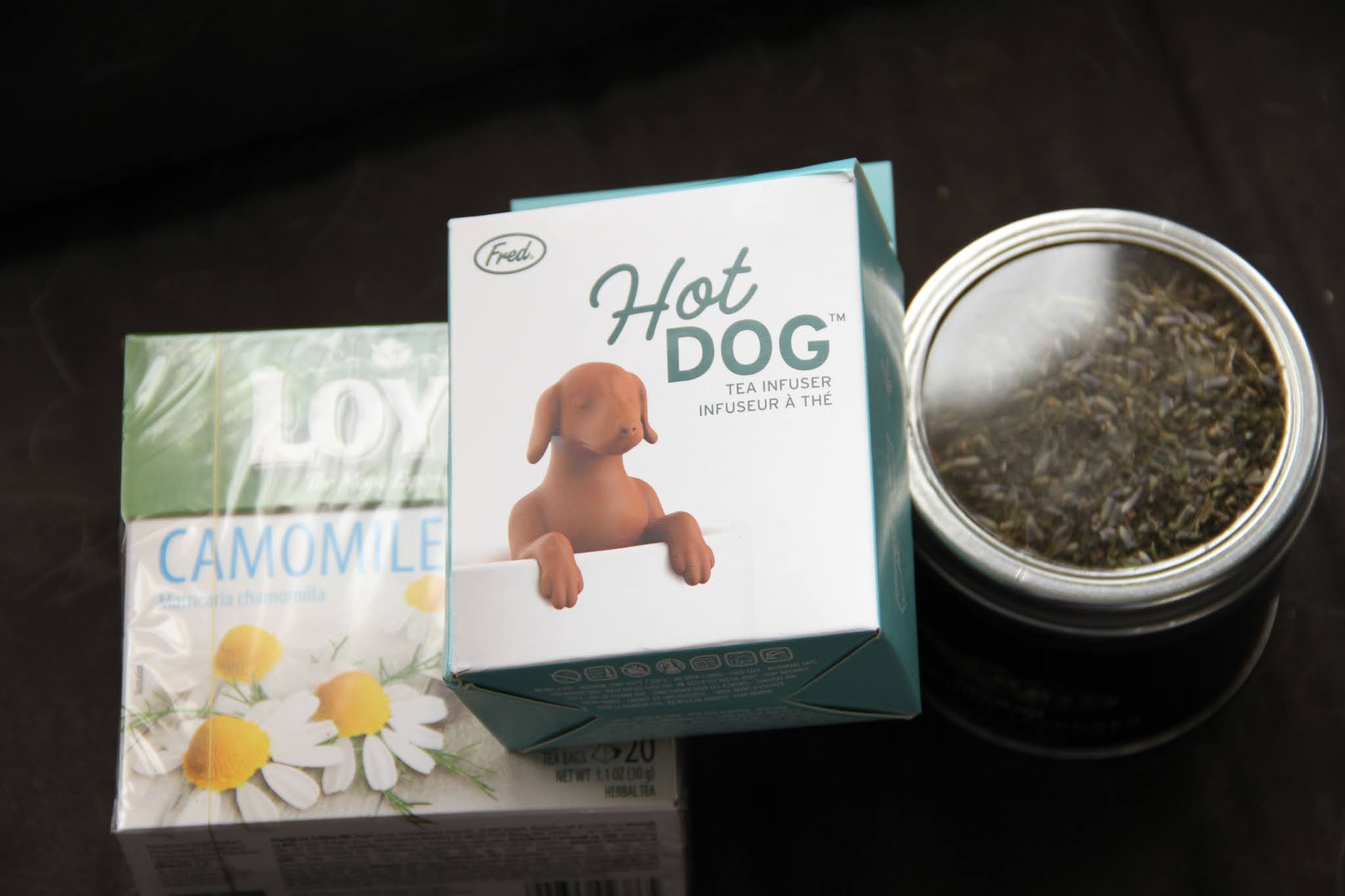
Hot dog tea diffuser and some new teas.
Slippers for my husband and a new winter nightgown and bath products for me from Toadstool Soaps (Etsy Shop I just love).
Cross for the wall made out of railroad spikes.
Lorelei has to check out each item. 
Star Trek pizza cutter.

Railroad War book (out of print so really worth finding a copy)/

Mike Rowe's Safety Third mask with Mr. Bill
Dr. Who  Peter Capadi Series.  I remember when he was first cast and so many people said  "he's too OLD to play the part".  Let me tell you something, the ladies who watch Dr. Who found him VERY sexy and great in the role.
12 Caliber Flashlights
Santa sticks to his aviation roots.  Love the "left rudder" "right rudder" socks. 


Lorelei ignores her toys to latch on to her Gabe to the Rescue stocking cap.

There was also some much-appreciated snow gear from my in-laws, True Blue Sam and my mother-in-law Susan, and a sweater (which I'm wearing as it's about 12 degrees outside).


Wednesday, December 23, 2020

Waiting for Christmas

Sometimes waiting for something is the best part.

Christmas was like that as a child, the build-up to the big day, shaking the presents under the tree, many which had been rigged with marbles or rocks inside to throw us off. Mom would make a couple of different types of cookies every few days, something new to taste and try with a plate set aside with a sample of everything to eat after the Christmas meal.

It's not just Christmas - there are many events in our lives we anxiously await. The birth of a baby, a holiday, a wedding, awaited with great longing, then suddenly over, vanished as if an illusion.
But Christmas Eve, as children, was the best.  We weren't allowed to open any gifts until Christmas morning.  We'd be up before the marked light of dawn, seeing the unwrapped gifts that Santa had left for us on the mantle around the fireplace, Mom and Dad trailing down the hall stifling yawns.

I spent Christmas Eve and day some years back with neighbors who let the kids open the gifts on Christmas Eve.  They didn't go to church so Christmas Day was simply watching sports while the kids played non stop video games.  I appreciated the invite but it felt no more like Christmas than the 4th of July.
No, waiting for the morning was anticipated glory.  I'd sleep in a little trundle bed next to my brothers, trying to stay awake to hear Santa. Mom would come in and lay the sunset-colored afghan she had crocheted on top of me for warmth.  Outside, the big, fat 1960's Christmas lights would shine through a window, curtains swept aside so we could see.   Overhead, an aircraft went on its way, solitary and swift like a shooting star.  We'd speak in low tones, as if in church, as outside the door, our wiener dog Pepper's toenails click-clacked on the hardwood floor as she patrolled her domain.

We would always fall asleep too soon, and wake before the sun rose with that flaming stare of quiet curiosity.
But Christmas isn't the only thing we look forward to.  It may be graduating from college.  It may be retirement.  I think of those people that have a countdown calendar to the day they can walk out the door.  Some come back to the workplace by to say hello as if tethered to that place they spent so many, many years. Some we never see again, that place nothing more than a coat they have now flung off in warmer lands.
You think what you wait for will take forever to get here.  Then, when it is behind you, those days seemed as they raced past, brilliant and quick, nothing more than a flash of light in the distance, the nights as short as fragmented dreams. Too soon, what you waited for is a memory, never to be reclaimed but in thought.

Dad does not wish to celebrate Christmas as anything more than the quiet communion in his home with the minister in celebration of Christ's birth. By his choice, there has not been a tree for a traditional Christmas celebration since my Mom died over 30 years ago. The aluminum tree and color wheel were packed away, never to be seen again though my husband found one of our own at a yard sale before we were married. In the years before Dad remarried, there was neither light nor breath in that house for my Dad and he just wanted Christmas to be over with, once my brother and I were out of the house.
When Dad did remarry, to a widow who had herself lost a beloved spouse- they usually spent Christmas at his sister in law's condo in San Diego - enjoying the warmth.  Dad did not wish to spend Christmas day in a house in which my Mom's laughter had gone silent.   I understood, spending Christmas with friends, later volunteering for extra flight duty so those with children could have the day off.  I understand it even more after losing my brother.
Today, I look up at the flash of light, here in the fading light.  It is is an airplane, the tiny blink of its passing no different than the ones we viewed as children. I know too well, the feeling of that crew, anxious to get to their destination, hoping they won't have weather or a mechanical issue that precludes their making it home in time for Christmas.  I know the sense of relief of the last flight of the night, launching into a sky, that like man, in one embrace can assume and appease, even as it cannot forgive.

Many a night I flew on Christmas Eve, eliciting a chuckle from the crew chief when he glanced up at the Cockpit and saw my Santa hat as we prepared to depart.  We were only anxious as to the day and time until we were aloft, then like seaman have probably felt since time began, we settled down, finding the true Peace of God and Earth somewhere over 35,000 feet, finding the storms and turbulence, not as some heavenly punishment for our selfishness in wanting to be home but rather a gentle rebuke to curb an impatient heart.
At altitude, we'd talk about Christmas past and the hope for Christmas future, perhaps one with a family, our voices quiet, no louder than expelled breath, as the miles ticked under us.  Those in the back of the airplane were subdued, anxious to get home, looking down on cities that twinkled like Christmas lights, clouds bunched over some of them, like warm flannel blankets. Some nights the wind would be so strong aloft we felt like we'd stopped, going forward not with will or strategy but simply that grooved habit to endure,

The recorded weather data that we'd confirm receipt of, instead of Delta and Echo and other letters of the phonetic alphabet were Dancer and Prancer and such.  On more than one Christmas Eve, my copilot would confirm Information "Santa" received and we'd made our final descent, not to a city where loved ones awaited, but simply a hotel room with all the ambiance of a dental lab, it's emptiness bringing that quick sharp sting that I could taste in my mouth as I opened the door.

There, I would sleep like a soldier in the field without shelter but for stiff, cotton sheets, waiting to wake up to the fight and the firing.
Tonight I look up and outside. There will be no Christmas light at home, too many commitments of work and family to get them up this year. But there will be a 1960's aluminum tree with an antique color wheel, found at a garage sale, repaired and set up by my husband.  There will be the click-clack of Abby's toenails on the hardwood floors as she patrols her domain. In the kitchen, there will be cookies and a pot of tea set to boil  And on the shelf, there will be found a framed picture of a little auburn-haired boy and girl sitting in their Dad's lap, Christmas decorations in the background, as he reads them a story.

It was a story of a baby, one not born of passion or pleasure but one born so that more than a Mother's suffering in his birth would be eased until the end of days.  It was a story of forgiveness we often can't receive from man, but that is His promise in eternity.
This Christmas season, I'm grateful for the anticipation of days.  Christmas will too soon be here and gone. Those that I spent the Christmas of my youth with are gone, but for Dad, his own days drawing to a close. What is left now may just be a fleeting illusion, but illusions, like memory, are as true as flesh, bone, and blood.

Rather than wish that Christmas was here, I'm going to wish it would wait, that I can savor this time of quiet peace, the smell of warmth, the laughter of my husband, and the hearkening of a family of angels who calm this impatient heart with a touch as soft as a caress.

 - L.B. Johnson

Wednesday, December 9, 2020

Christmas Gift Clue by Four (what my husband calls a not so subtle hint on a gift purchase).


Writer Shed Stories, Vol. 2 edited by Award-Winning Author and former author in residence at the Chicago Hemingway House David W. Berner is a brilliant anthology filled with poignant stories that will touch your heart, uplift your spirit, and possibly change you for the better. The writing is exceptional. - Amazon Vine Reviewer N.N. Light

 http://amzn.to/2HmN33b (My story - lessons on loss is the last in the book).  

Thursday, November 26, 2020

On Thanks


Thanksgiving isn't the same with both Mom and my brother gone.  But thinking of that got me to smile with a memory from a Thanksgiving long ago. Mom had read somewhere that cooking the turkey in a bag would render the turkey very juicy. Except she missed the part about low temperature and the type of bag. So Mr. Turkey went into the oven in a Safeway paper shopping bag,  pop-out timer side down.

 As he roasted, the juice and grease pooled in the bottom of the bag. When the timer popped, "turkey's done" it popped THROUGH the bag, releasing all the hot grease onto the burner.

WHOOSH!

Big Bro calmly said "Mom, the turkey blew up!"
It was the first and only time I heard my Mom say a four-letter cuss word. Dad admonished her to leave the door closed as she turned the heat off.  He simply stood in the corner of the kitchen, muttering "Oh, the Humanity", tears rolling down his face as he was laughing so hard. We had KFC that year as the remains were removed in a bucket.

After Mom took ill, there were other events. A time at the vacation cabin where Dad cooked pancakes. I'm not sure how he did it, but you could hardly cut through them. He gave one to our wiener dog Pepper, who took it outside and buried it in the sand along the shore. Big Bro threw another one in the fire. It didn't burn.

I can picture that as if it were happening now, the splash of sunlight on cedar, the memory, of the smell of wet dog and the taste of laughter, of where people have lived and will always.
Hygge.  The word comes to mind, especially at Thanksgiving.  It's a Danish word that roughly means eating and drinking and being together with friends, a feeling or mood that comes from taking genuine pleasure in making ordinary everyday things simply extraordinary. We don't have any such word in the English language, and life today seems to rarely accommodate such a ritual.

I can be insular, and driven. At work I take no quarter and am not intimidated by blood, death or bad hair days.. Yet at home, I am a caregiver, as my Mom was with us. Even when she was tired, she would make us homemade cookies and pastries to have after school or with our lunch. Shortening scrapped from its can, dough formed and rounded, rolled flat, and rolled up, carefully studded with fragrant spices and baked golden.
When at school, I'd open up my lunch box, and find every given day, a peanut butter sandwich, an apple, coins for milk, and an ice cream and a small tinfoil packet I'd unfold with great care. Inside, the scraps of her making, dusted with cinnamon and sugar, soft and whole. I do not share. I scrape the foil clean.

Dinner at the big table wasn't just on Thanksgiving. It was every night but TV Tray in the Family Room Night. But on those dinners around the big table, I can't recall so much of what we talked about or who said what, but I do remember the gathering, the smells of beef and fresh vegetables, of laughter, of stories from school, from work, a discarding of weighty thought and the simple gathering of those you love, for the nourishment of the soul. I can't recreate the exact moments through what I cook, or who I serve it to, but I still can remember how those simple meals made me feel, the redemptive power of the communion of those who love one another.

When Dad sold the family home the only things I wished from it were small; things of worth, but perhaps not value. A couple are tattered cookbooks in which are written Mom's notes of when she made something new and if we liked it. One was a folder in which Mom placed handwritten menu plans for family gatherings and holidays. Some were planned dishes, some were instructions for the meal itself. Piece after piece of small lined paper, on which her handwriting lay.
So many scraps of paper, so many meals, some dated 1962 when she and Dad were still new in the house.  It was the house she lived in the remainder of her life and to which they brought me and Big Bro home as small, scared children, to heal with them, then to belong, as family.

I hold those pieces of paper and feel the warmth, a woman preparing food for her family, for her friends, small hieroglyphs that tell me nothing but that someone loved us, scribbled messages that would not make sense to everyone but will never fail to be understood.

At that family table we learned many things.  We learned patience (I tell you young lady, you are going to sit here until you eat that squash!) We learned aerodynamics (spoon at 45 degrees, wind from the SE at two mph, PEAS, initiate launch sequence!)  We learned thanks, and not just at Thanksgiving. We learned comfort and safety.

As I went out on my own, even when I didn't have a family of my own, there was a gathering, even if I just invited over my bachelor colleagues, put together a ham and some homemade mashed potatoes and the trimmings while we listened to music and actually talked about something other than our jobs. For it was the sharing and the care that was important, not necessarily what we ate.
Hygge, it's something I learned from my Mom as I watched her growing up. Even as Dad bought her the latest appliances to ease her burden as she grew sicker, she continued to make things as her Mom and generations past had done, stirring by hand, shaping and crafting, only forming a brief and sullen armistice with the food processor when chemo was winning.
She made meals in health and she made meals in sickness, those last days where there was a look on her face as if having seen something which she knows existed even as she refused to believe in it. She'd pause, blink as if the sun was in her eyes, then go back to peeling the carrots for one of perhaps thousands of relish trays she made in her life. Then she'd set it upon that old dining room table with the captain's chairs that looked like something taken off an old schooner, a table that looked out of place among all the 70's orange and yellow shag carpeting but was as timeless as that moment.

She carried more than meals to the table, she carried us, with broken dreams and broken hearts, holding us together, even as she left us.

 "You did good Mom," I say to an empty kitchen, the curtains in the window moving with the opening of a door as if breath. Then the curtains fall still, the room quiet as if this hushed little space is isolated in space, without time or dimension, hollowed whisperings of love and safety amidst the turmoil and fury of time. There is no light in the room now, but for one small kitchen candle, the flame standing sentient over the wick as I wait for the sound of steps on the porch.

My Dad's table will not ever be graced by all of us again, but it will be the inheritance of those who remain, few of them family by blood, but all of them family by acceptance. I hope that one day, long after I am gone, a small child will sit at it and say "tell us the story about when Great Grandma Grace's turkey blew up". . . .

. . and laughter will ring out again.
-LBJ